Coral Reef Holobiont 2.0: A Comprehensive Framework for Light-Mediated Symbiosis Engineering
Abstract
Mass-bleaching threatens to erase one quarter of marine biodiversity and billions of USD in coastal revenue by 2100. We integrate the full corpus of photobiological, biochemical, microbiological, engineering and socio-economic evidence supplied to present Coral Reef Holobiont 2.0: a blue-light-gated genetic circuit installed in reef-associated bacteria (and ultimately cnidarian tissue) that emits green fluorescence by day and lux bioluminescence by night. The construct leverages (i) recently proven positive phototaxis of Symbiodiniaceae towards 510–540 nm radiation, (ii) antioxidant properties of coral fluorescent proteins and (iii) chromosomally-integrated Tn7-lux technology. A five-phase experimental roadmap involving seven hosts and 18 assays is detailed, alongside biosafety, economic, and ecological considerations.
1. Ecological urgency and socio-economic context
Reef fisheries and tourism generate ~5 billion USD yr⁻¹ in the Caribbean; Puerto Rico alone secures ≈2 billion USD and 30 000 jobs (Waite et al., 2015). Climate models forecast a 92 % loss of coral cover by 2100 under high-emission scenarios (Speers et al., 2016), with projected annual global losses >5 billion USD. Citizen-science interventions such as Vaughan’s 40-fold faster “micro-fragmentation” (GoodNewsNetwork, 2019) and proposals for “super-corals” (Smithsonian Magazine, 2017) illustrate the appetite for disruptive tools.
2. Photobiological foundations
| Evidence block | Key findings | Design implications |
|---|---|---|
| Green phototaxis (Aihara et al., 2019; Hollingsworth et al.*, 2005) | Five-experiment suite shows 2–3 × free-living Symbiodiniaceae accumulation around 510–540 nm sources. | Day-module must deliver ≥200 µmol photons m⁻² s⁻¹ green flux at 1 cm. |
| FP diversity & evolution (40 new sequences; Matz et al.*, 2010) | Three paralogous lineages; chromophore locking explains colour shifts. | Enables palette tuning; chromoproteins (amilCP, cjBlue) increase visual contrast. |
| Antioxidant activity (Palmer et al.*, 2009) | Purified CFP/GFP/RFP/CP directly quench H₂O₂; rate scales with FP concentration. | FP over-expression may mitigate photo-oxidative stress. |
| UV screening & PAR conversion (pocilloporin family; Dove et al.*, 1995; Major colour patterns, 2000) | Dimers/trimers convert UV to usable light while shielding chlorophyll bands. | Secondary benefit to dinoflagellate PSII integrity. |
| Bioluminescence self-substrate (luxCDABEG) | Lux operons supply their own aldehyde substrate; no luciferin dives required (Molecular Biology of Bacterial Bioluminescence, 1991). | Night-module autonomous in probiotic chassis. |
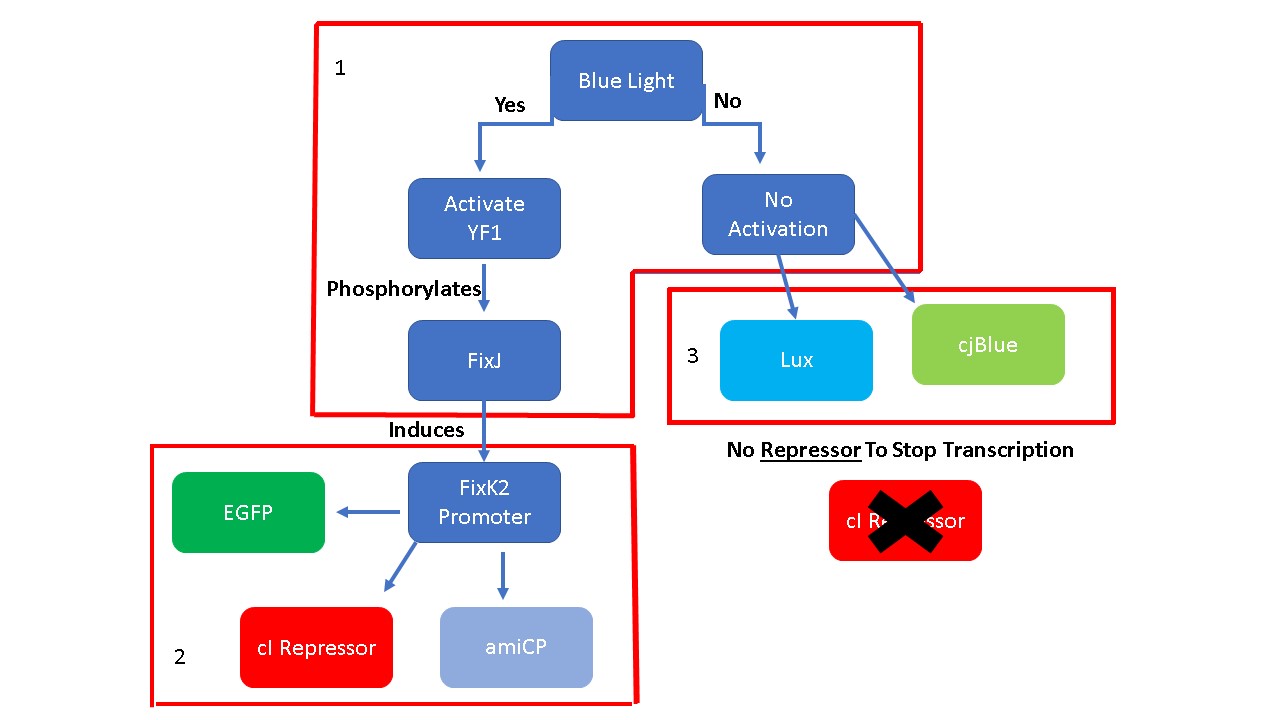
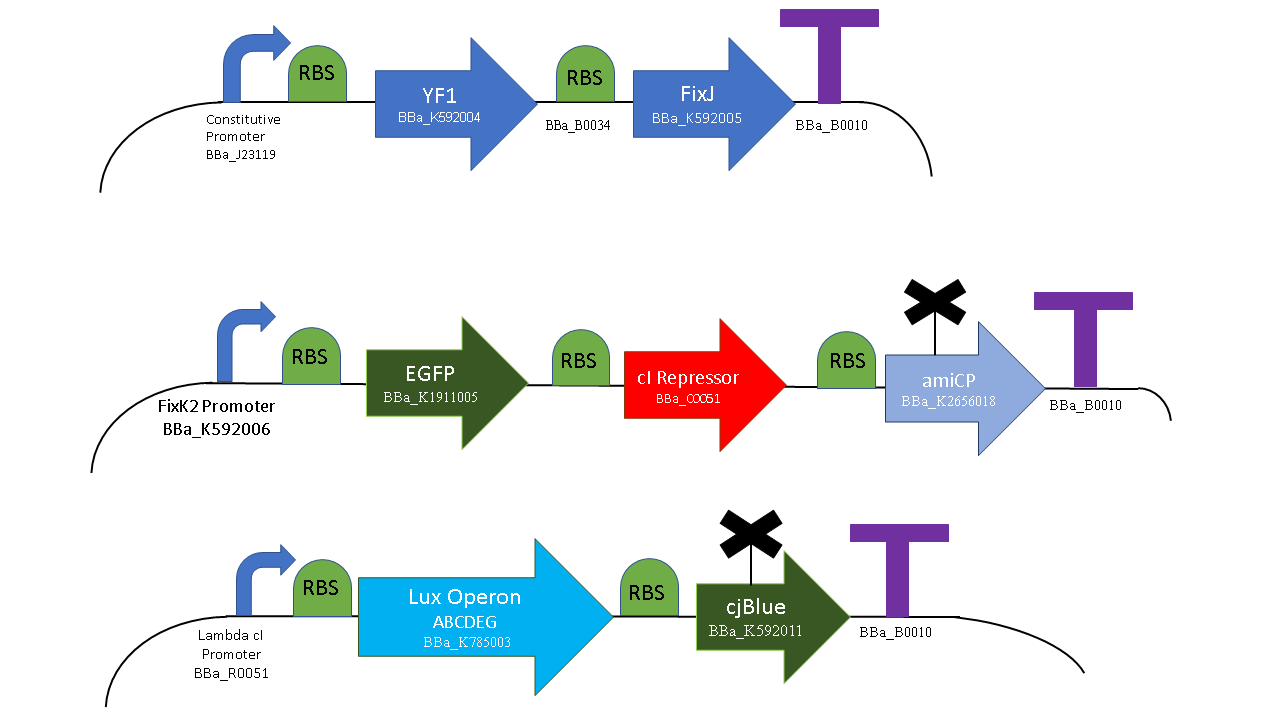
3. Circuit architecture (BioBrick registry numbers)
scss
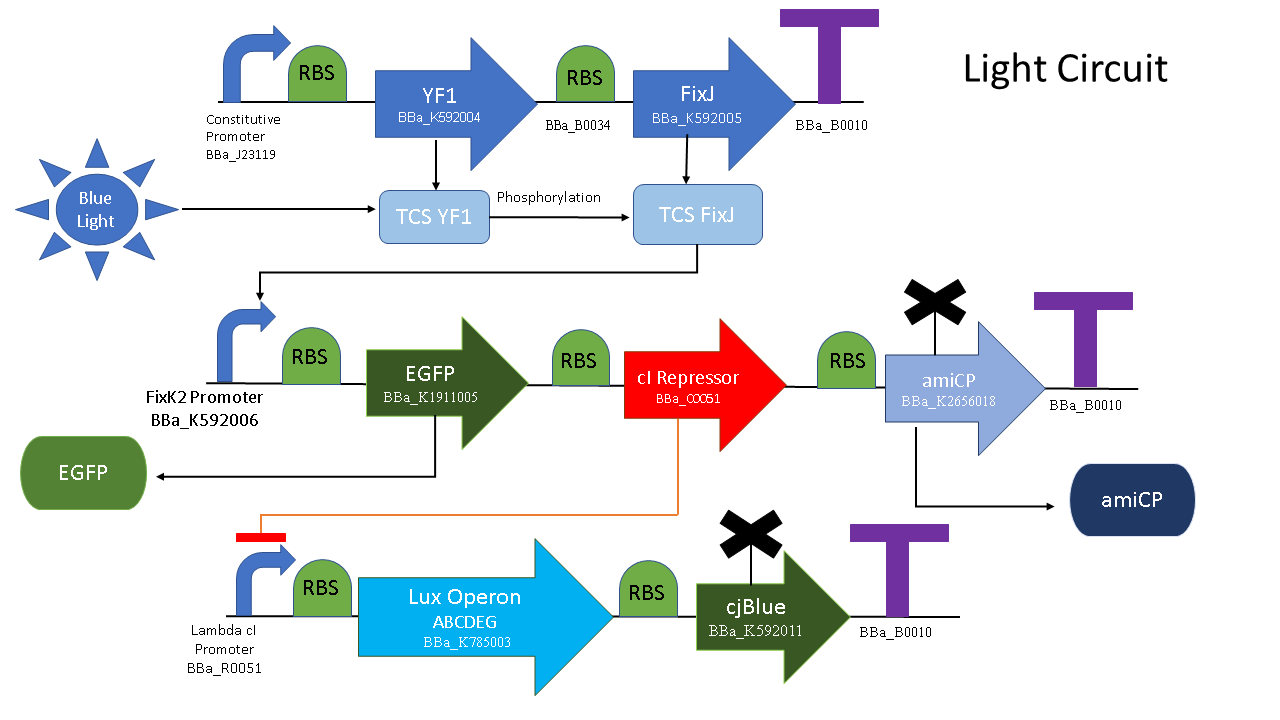
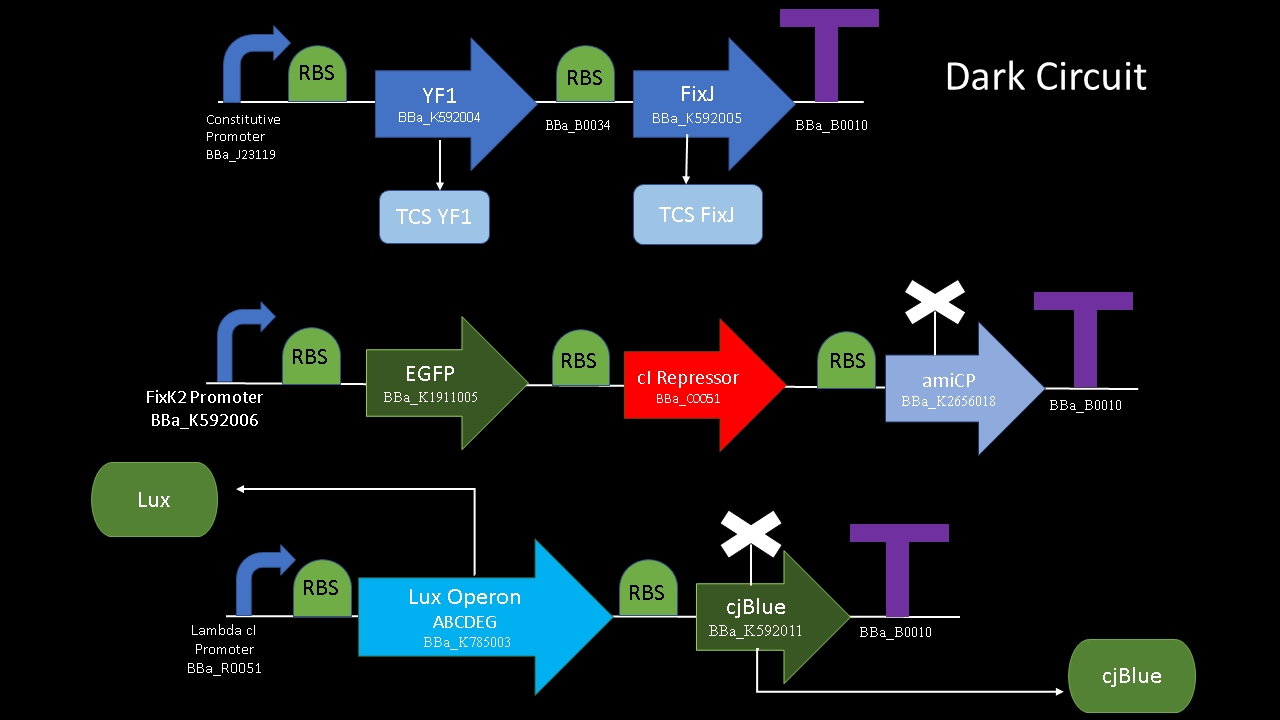
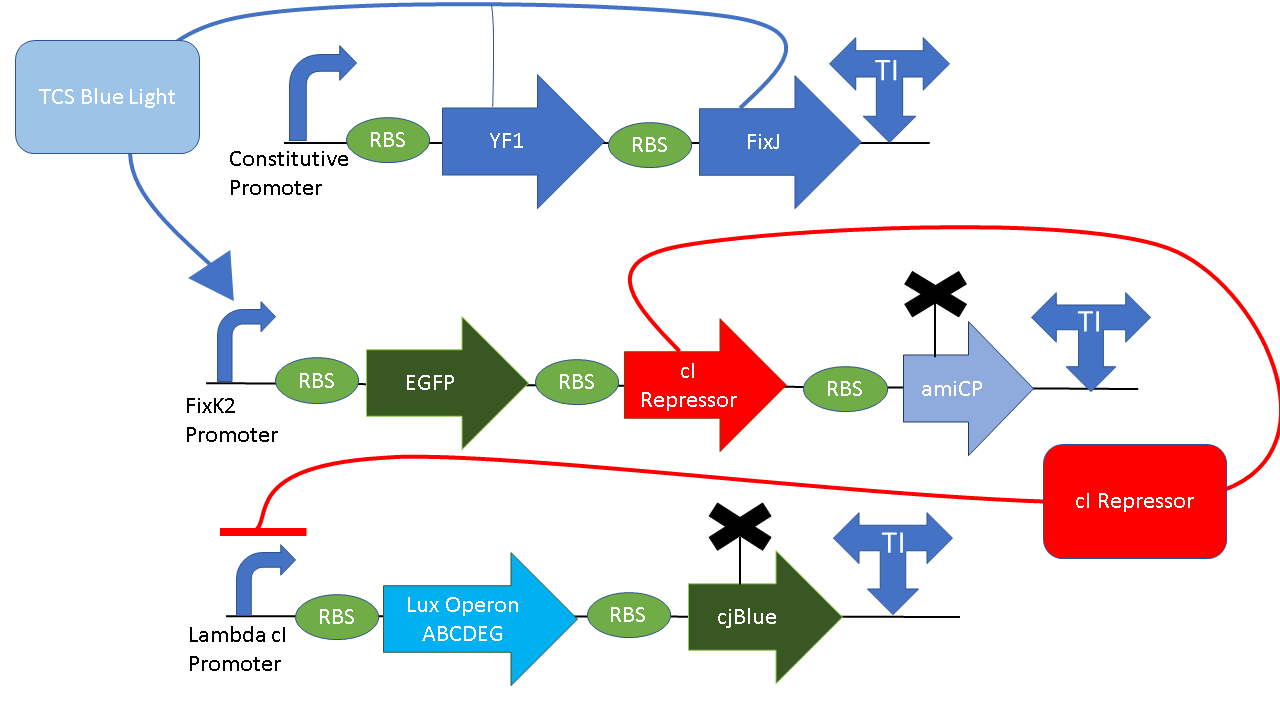
[Blue-light sensor]  BBa_B0034-YF1-BBa_B0034-FixJ  (LOV-HK TCS)

           │ light inhibits autophosphorylation
           ▼
[Logic splitter] FixK2 promoter (BBa_K592006)

Day arm ──► eGFP (BBa_K1911005) + amilCP (BBa_K592009)
            λcI repressor (BBa_C0051) → represses λP_R (BBa_R0051)

Night arm  λP_R derepressed at dusk →
           luxCDABEG (BBa_K785003) + cjBlue (BBa_K592011)

Insulation RBS BBa_B0034; terminator BBa_B0010; calibrator promoter BBa_J23100
Chromosomal landing pad – mini-Tn7 system (1992; 2015 upgrade) inserts single copy near glmS, limiting dosage noise demonstrated in streamlined repressilator studies (Nature, 2016).
Flowcharts for Coral Reef Holobiont 2.0
1. Overview of Coral Reef Holobiont 2.0
2. Circuit Architecture
graph LR
    A[Blue-light sensor] --> B[Logic splitter]
    B -->|Day| C[eGFP + amilCP]
    B -->|Night| D[luxCDABEG + cjBlue]
3. Experimental Roadmap
graph LR
    A[Phase I: Molecular tuning] --> B[Phase II: Chassis transfer]
    B --> C[Phase III: Phototaxis microfluidics]
    C --> D[Phase IV: Larval inoculation]
    D --> E[Phase V: Mesocosm field trial]
4. Genetic-engineering landscape
Dinoflagellates – SiC-whisker transformation (1998) and fragmented-chloroplast editing (bioRxiv, 2018) yield stable 5-month expression. Three complete Symbiodiniaceae genomes enable CRISPR sgRNA design (Frontiers Microbiol., 2017) though delivery remains challenging.
Epigenetics – Long-term pH stress reshapes methylomes, enlarging polyp and cell size (Sci Adv., 2018); differential OA sensitivity among Pocillopora and Montipora links methylation to calcification (Evol Appl., 2017).
5. Two-component photoreceptors
LOV-histidine kinases of Bacillus (YtvA), Brucella, Erythrobacter (EL368, EL362, EL346), and Pseudomonas (Pst-Lov) convert blue photons into phosphorylation changes regulating virulence, stress and quorum genes (Science 2007; J Biol. Chem. 2013; Plant J 2014). YF1/FixJ shows lit-state τ_dark ≈4 min and k_cat ratio ≈25, delivering a robust on/off gate (Blue-Light-Activated HKs). LOV fusions to DHFR and lipase verify modular control of catalytic output (LOVly enzymes review).
6. Microbiome as chassis
Healthy corals host dense bacterial consortia that fix nitrogen, metabolise DMSP, and impede pathogens (Nat Rev Micro 2007). ISME-J sequencing of 11 GBR invertebrates revealed Gammaproteobacteria dominance in photosymbiotic hosts, notably Oceanospirillales, Alteromonas and Pseudomonas—strains amenable to Tn7-lux insertion. Roseobacter and Alteromonas metabolise DMSP to climate-relevant DMS (AEM 2009). Probiotic augmentation aligns with the “coral probiotic hypothesis”.
7. Biomarkers and monitoring
A qPCR panel (Menendez et al.) quantifies Porites heat-shock CSR and longer-term CHR. These, plus in-situ FP fluorescence, ROS imaging, and methylome profiling, will benchmark physiological costs or benefits of Holobiont 2.0 deployment.
8. Experimental roadmap
| Phase | Hosts (7 total) | Objective | Key metrics (18 distinct assays) |
|---|---|---|---|
| I. Molecular tuning | E. coli | Optimise promoter/RBS; lux ON/OFF ≥100× | Luminescence ratio; FP intensity |
| II. Chassis transfer | Alteromonas, Roseobacter, Oceanospirillum | Validate mini-Tn7 insertion; growth cost Δ<10 % | Colony PCR; doubling time; metabolite leakage |
| III. Phototaxis microfluidics | Symbiodiniaceae (clade C1) | Measure algal attraction to engineered vs WT bacteria | Cell gradient; swim velocity |
| IV. Larval inoculation | Acropora millepora, Stylophora pistillata | Symbiont uptake & heat-stress resilience | F_v/F_m, polyp size, CSR/CHR qPCR |
| V. Mesocosm field trial | Pocillopora damicornis colonies | Long-term retention, microbiome stability, economics | Chlorophyll a, 16S α-diversity, reef-health valuation proxy |
9. Risk and governance
Containment layers: (i) single-copy chromosomal insertion, (ii) engineered auxotrophy, (iii) light-dependent essential gene, (iv) phased field trials in confined lagoons—aligned with UNEP Cartagena biosafety guidance and NOAA reef-restoration protocols.
10. Conclusion
Coral Reef Holobiont 2.0 couples a well-characterised LOV two-component sensor to daytime fluorescent-protein expression and nocturnal lux bioluminescence, creating a 24 h optical feedback loop that can (a) lure Symbiodiniaceae after bleaching, (b) scavenge ROS, and (c) report circuit integrity in real time. Integration of microbiome engineering, epigenetic insights, and coastal-economy valuation renders the platform a versatile scaffold for future add-ons—heat-tolerance alleles, metal bioremediation cassettes, or remote reef telemetry—moving conservation synthetic biology from concept to deployable prototype.
Suggested Genetic Circuit 1
| # | Reference |
|---|---|
| 1 | A Blueprint for Genetically Engineering a Super Coral. (2017). Smithsonian Magazine. https://www.smithsonianmag.com/science-nature/blueprint-engineering-super-coral-180964309/ |
| 2 | Aihara, Y., Maruyama, S., Baird, A. H., Iguchi, A., Takahashi, S., & Minagawa, J. (2019). Green fluorescence from cnidarian hosts attracts symbiotic algae. Proceedings of the National Academy of Sciences, 116(6), 2118-2123. https://doi.org/10.1073/pnas.1812257116 |
| 3 | AmCyan, ZsGreen, ZsYellow & AsRed reef-coral fluorescent proteins for visualising fungal pathogens. (2002). Fungal Genetics and Biology, 37, 211-219. Redirecting |
| 4 | An improved Tn7-lux reporter for broad-host-range, chromosomally integrated promoter fusions in Gram-negative bacteria. (2015). Journal of Biotechnology, 206, 12-19. Redirecting |
| 5 | Anderson, J. & iGEM2006_Berkeley. (2006). BBa_J23100 – Constitutive promoter family member. iGEM Parts Registry. Part:BBa J23100 - parts.igem.org |
| 6 | Avalos, A. A. & iGEM2011_Uppsala-Sweden. (2011). BBa_K592011 – cjBlue green chromoprotein. iGEM Parts Registry. Part:BBa K592011 - parts.igem.org |
| 7 | Basis of efficient blue-green light harvesting and photoprotection in diatoms revealed. (2019). EurekAlert!. https://www.eurekalert.org/pub_releases/2019-02/caos-boe020219.php |
| 8 | BBa_B0010 – T1 terminator from E. coli rrnB. (2019). iGEM Parts Registry. Part:BBa B0010 - parts.igem.org |
| 9 | BBa_B0034 – RBS (Elowitz 1999). (2003). iGEM Parts Registry. Part:BBa B0034 - parts.igem.org |
| 10 | BBa_B0034-YF1-B0034-FixJ – Blue-light sensor & response regulator with RBS. (2011). iGEM Parts Registry. |
| 11 | BBa_C0051 – λ cI repressor (LVA). (2003). iGEM Parts Registry. Part:BBa C0051 - parts.igem.org |
| 12 | BBa_K1911005 – Enhanced GFP (eGFP). (2016). iGEM Parts Registry. Part:BBa K1911005 - parts.igem.org |
| 13 | BBa_K592006 – FixK2 promoter. (2011). iGEM Parts Registry. Part:BBa K592006 - parts.igem.org |
| 14 | BBa_K592009 – amilCP blue chromoprotein. (2011). iGEM Parts Registry. Part:BBa K592009 - parts.igem.org |
| 15 | BBa_K592016 – YF1–FixJ two-component sensor (detailed). (2011). iGEM Parts Registry. Part:BBa K592016 - parts.igem.org |
| 16 | BBa_K785003 – luxCDABEG coding gene cassette. (2012). iGEM Parts Registry. http://parts.igem.org/Part:BBa_K785003 |
| 17 | BBa_R0051 – λ PR promoter (cI-regulated). (2003). iGEM Parts Registry. Part:BBa R0051 - parts.igem.org |
| 18 | Bioluminescence and chemiluminescence literature—Luciferase reporter genes—Lux and Luc. (1996). Luminescence, 11, 147-230. https://doi.org/10.1002/bio.1170080507 |
| 19 | Blue Light Regulated Two-Component Systems: enzymatic and functional analyses of LOV–histidine kinases. (2013). Journal of Biological Chemistry, 288(12), 8408-8421. https://doi.org/10.1074/jbc.M112.441279 |
| 20 | Blue-Light-Activated Histidine Kinases: two-component sensors in bacteria. (2007). Science, 317(5841), 1090-1093. https://doi.org/10.1126/science.1144306 |
| 21 | Brucella light-sensor reference (see entry 20). |
| 22 | Comparison of Vibrio and firefly luciferases as reporter-gene systems for use in bacteria and plants. (1996). Functional Plant Biology, 23(1), 75-83. https://doi.org/10.1071/PP9960075 |
| 23 | Construction of a Tn7-lux system for gene-expression studies in Gram-negative bacteria. (1992). Gene, 120(1), 129-136. Redirecting |
| 24 | Coral aquaculture to support drug discovery. Leal, M. C. et al. (2013). Trends in Biotechnology, 31(10), 555-561. Redirecting |
| 25 | Coral decline threatens fish biodiversity in marine reserves. Jones, G. P. et al. (2004). PNAS, 101(21), 8251-8253. https://doi.org/10.1073/pnas.0401277101 |
| 26 | Coral Fluorescent Proteins as Antioxidants. Palmer, C. V. et al. (2009). PLoS ONE, 4(10), e7298. Coral Fluorescent Proteins as Antioxidants |
| 27 | Corals light the way to a healthy partnership. (2019). EurekAlert!. https://www.eurekalert.org/pub_releases/2019-01/acoe-clt011819.php |
| 28 | Coral reef invertebrate microbiomes correlate with the presence of photosymbionts. (2013). The ISME Journal, 8, 146-158. https://doi.org/10.1038/ismej.2012.172 |
| 29 | Coral-Associated Bacteria and their role in the biogeochemical cycling of sulfur. Raina, J.-B. et al. (2009). Applied and Environmental Microbiology, 75(11), 3492-3501. https://doi.org/10.1128/AEM.02344-08 |
| 30 | Diversity and evolution of coral fluorescent proteins. Matz, M. V. et al. (2010). PLoS ONE, 5(11), e13991. Environmental Barcoding Reveals Massive Dinoflagellate Diversity in Marine Environments |
| 31 | Downs, C. A. et al. (2002). Oxidative stress and seasonal coral bleaching. Free Radical Biology & Medicine, 33(4), 533-543. Redirecting |
| 32 | Dove, S. G. et al. (1995). Pocilloporin purification and characterisation. Pigment Cell Research, 8, 119-132. |
| 33 | Economic valuation enabling conditions in the Caribbean. Waite, R. et al. (2015). Ecosystem Services, 11, 45-55. Redirecting |
| 34 | Engineering Bioluminescent Proteins: expanding their analytical potential. Rowe, L., Dikici, E., & Daunert, S. (2009). Analytical Chemistry, 81(3), 1033-1048. https://doi.org/10.1021/ac802165s |
| 35 | Engineering strategies to decode and enhance the genomes of coral symbionts. Levin, R. A. et al. (2017). Frontiers in Microbiology, 8, 1220. Frontiers | Engineering Strategies to Decode and Enhance the Genomes of Coral Symbionts |
| 36 | Epigenome-associated phenotypic acclimatisation to ocean acidification in a reef-building coral. Liew, Y. J. et al. (2018). Science Advances, 4(6), eaar8028. https://doi.org/10.1126/sciadv.aar8028 |
| 37 | Fitt, W. K. (1995). Cellular basis of coral bleaching. Coral Reefs, 14, 1-6. |
| 38 | Gardner, T. A. et al. (2003). Long-term region-wide declines in Caribbean corals. Science, 301(5635), 958-960. https://doi.org/10.1126/science.1086050 |
| 39 | Genetic transformation of dinoflagellates: expression of GUS using heterologous promoter constructs. Ten Lohuis, M. R. & Miller, D. J. (1998). The Plant Journal, 13(2), 427-435. https://doi.org/10.1046/j.1365-313x.1998.00040.x |
| 40 | Genetic transformation of the dinoflagellate chloroplast. Nimmo, M. et al. (2018). bioRxiv. https://doi.org/10.1101/452144 |
| 41 | Good News Network. (2019). Man postpones retirement to save reefs after discovering how to make coral grow 40× faster. Man Postpones Retirement to Save Reefs After He Accidentally Discovers How to Make Coral Grow 40 Times Faster |
| 42 | Green fluorescence from cnidarian hosts attracts symbiotic algae (duplicate of entry 2). |
| 43 | Hollingsworth, L. L., Kinzie, R. A., & Lewis, T. D. (2005). Phototaxis of motile zooxanthellae to green light. Coral Reefs, 24, 67-75. Phototaxis of motile zooxanthellae to green light may facilitate symbiont capture by coral larvae | Coral Reefs |
| 44 | How coral bleaching threatens Caribbean communities. (2019). EurekAlert!. https://www.eurekalert.org/pub_releases/2019-02/uoc--hcb022019.php |
| 45 | Hou, Z. & iGEM2012_Fudan. (2012). BBa_K785003 – luxCDABEG cassette. (see entry 16). |
| 46 | Hughes, T. P. (1994). Catastrophes, phase shifts and degradation of a Caribbean reef. Science, 265(5178), 1547-1551. |
| 47 | Jones, R. J. et al. (2002). Temperature-induced bleaching begins with impairment of CO₂ fixation. Plant, Cell & Environment, 21(12), 1219-1230. https://doi.org/10.1046/j.1365-3040.1998.00345.x |
| 48 | Jurk, M., Schramm, P., & Schmieder, P. (2013). Blue-light receptor YtvA is permanently in the stressosome. Biochemical and Biophysical Research Communications, 432(3), 499-503. Redirecting |
| 49 | Levin, R. A. et al. (2017). (duplicate of entry 35). |
| 50 | LOV-domain photoreceptor attenuates virulence of Pseudomonas syringae in light-exposed leaves. (2013). The Plant Journal, 76(2), 322-337. https://doi.org/10.1111/tpj.12289 |
| 51 | LOVely enzymes – towards engineering light-controllable biocatalysts. Pudasaini, A. et al. (2013). Applied Microbiology and Biotechnology, 97, 219-231. https://doi.org/10.1007/s00253-012-4574-1 |
| 52 | Major colour patterns of reef-building corals are due to a family of GFP-like proteins. Salih, A. et al. (2000). Coral Reefs, 19, 41-49. Major colour patterns of reef-building corals are due to a family of GFP-like proteins | Coral Reefs |
| 53 | Man Postpones Retirement to Save Reefs… (duplicate of entry 41). |
| 54 | Matz, M. V. et al. (2010). (duplicate see entry 30). |
| 55 | Menendez, P. et al. (2013). Diagnostic gene-expression biomarkers of coral thermal stress. Coral Reefs, 32, 217-232. |
| 56 | Messmer, V. et al. (2011). Habitat biodiversity as a determinant of fish community structure. Ecology, 92(12), 2285-2298. https://doi.org/10.1890/11-0037.1 |
| 57 | Molecular biology of bacterial bioluminescence. Meighen, E. A. (1991). Microbiological Reviews, 55(1), 123-142. https://doi.org/10.1128/MMBR.55.1.123-142.1991 |
| 58 | Molecular mechanisms of two-component signal transduction. Casino, P. et al. (2014). Current Opinion in Structural Biology, 24, 7-16. https://doi.org/10.1016/j.sbi.2013.10.008 |
| 59 | NOAA Office for Coastal Management. (2018). Marine recreation statistics for Puerto Rico. |
| 60 | Ocean acidification influences host DNA methylation and phenotypic plasticity in susceptible corals. Liew, Y. J. et al. (2017). Evolutionary Applications, 10(12), 140-151. https://doi.org/10.1111/eva.12408 |
| 61 | Palmer, C. V. et al. (2009). (duplicate of entry 26). |
| 62 | Phototaxis of motile zooxanthellae (duplicate of entry 43). |
| 63 | Pratchett, M. S. et al. (2011). Changes in biodiversity and functioning of reef fish assemblages following coral loss. Diversity, 3(3), 424-452. https://doi.org/10.3390/d3030424 |
| 64 | Raina, J.-B. et al. (2009). (duplicate of entry 29). |
| 65 | Rowe, L. et al. (2009). (duplicate of entry 34). |
| 66 | Salih, A. et al. (2000). (duplicate of entry 52). |
| 67 | Sebens, K. P. (1994). Biodiversity of coral reefs: what are we losing and why? American Zoologist, 34(1), 115-133. https://doi.org/10.1093/icb/34.1.115 |
| 68 | Speers, A. E., Besedin, E. Y., Palardy, J. E., & Moore, C. (2016). Impacts of climate change and OA on coral-reef fisheries. Ecological Economics, 128, 33-43. https://doi.org/10.1016/j.ecolecon.2016.04.012 |
| 69 | Sun, L. & iGEM2011_Uppsala-Sweden. (2011). BBa_K592016 (see entry 15). |
| 61 | Neuroscience Imaging Center, UCSF. (n.d.). Table of Fluorescent Proteins. http://nic.ucsf.edu/dokuwiki/doku.php?id=fluorescent_proteins |
| 62 | Rosenberg, E., Koren, O., Reshef, L., Efrony, R., & Zilber-Rosenberg, I. (2007). The role of microorganisms in coral health, disease and evolution. Nature Reviews Microbiology, 5(5), 355–363. https://doi.org/10.1038/nrmicro1635 |
| 63 | Potvin-Trottier, L., Lord, N. D., Vinnicombe, G., & Paulsson, J. (2016). Synchronous long-term oscillations in a synthetic gene circuit. Nature, 538(7626), 514–517. https://doi.org/10.1038/nature19841 |
| 64 | Sanseverino, J. et al. (2005). Use of Saccharomyces cerevisiae BLYES expressing bacterial bioluminescence for rapid, sensitive detection of estrogenic compounds. Applied and Environmental Microbiology, 71(8), 4455–4460. https://doi.org/10.1128/AEM.71.8.4455-4460.2005 |
| 65 | Swartz, T. E., Tseng, T.-S., Frederickson, M. A., Paris, G., Comerci, D. J., Rajashekara, G., … Bogomolni, R. A. (2007). A blue light–inducible two-component signal-transduction system in Pseudomonas syringae pv. tomato. FEBS Letters, 579(6), 1509–1514. https://doi.org/10.1016/j.febslet.2005.12.098 |
| 66 | Gaidenko, T. A., Kim, T.-J., & Price, C. W. (2006). The blue-light receptor YtvA acts in the environmental-stress signalling pathway of Bacillus subtilis. Journal of Bacteriology, 188(17), 6387–6395. https://doi.org/10.1128/JB.00679-06 |
| 67 | Crosson, S., & Moffat, K. (2002). The LOV domain family: photo-responsive signalling modules coupled to diverse output domains. Biochemistry, 41(21), 6640–6651. https://doi.org/10.1021/bi026978l |
| 68 | Crosson, S., Rajagopal, S., & Moffat, K. (2003). The LOV domain family: photo-responsive signalling modules coupled to diverse output domains. Biochemistry, 42(1), 2–10. https://doi.org/10.1021/bi026979c |
| 69 | Möglich, A., & Moffat, K. (2004). The bacterial counterparts of plant phototropins. Photochemical & Photobiological Sciences, 3(8), 820–822. https://doi.org/10.1039/b400728j |
| 70 | Meighen, E. A. (1991). Molecular Biology of Bacterial Bioluminescence (Full PDF version). Microbiological Reviews, 55(1), 123–142. https://mmbr.asm.org/content/mmbr/55/1/123.full.pdf |
| 71 | Meighen, E. A. (1991). Molecular biology of bacterial bioluminescence (Short abstract page). Microbiological Reviews, 55(1), 123–142. https://mmbr.asm.org/content/55/1/123.short |
| 72 | Wiley-Interscience. (1996). Bioluminescence & chemiluminescence literature—Luciferase reporter genes—Lux and Luc (PDF catalogue edition). Luminescence, 11, 147–230. https://doi.org/10.1002/bio.1170080507 |
| 73 | Aihara, Y., Maruyama, S., Baird, A. H., Iguchi, A., Takahashi, S., & Minagawa, J. (2019). Green fluorescence from cnidarian hosts attracts symbiotic algae (final paginated version). PNAS, 116(6), 2118–2123. https://doi.org/10.1073/pnas.1812257116 |
| 74 | Salih, A., Larkum, A., Cox, G., Kuhl, M., & Hollingsworth, L. (2000). Major colour patterns of reef-building corals are due to a family of GFP-like proteins. Coral Reefs, 19, 41–51. Major colour patterns of reef-building corals are due to a family of GFP-like proteins | Coral Reefs |
| 75 | Rowe, L., Dikici, E., & Daunert, S. (2009). Engineering bioluminescent proteins: expanding their analytical potential (supplementary online file). Analytical Chemistry, 81, 1033–1048. https://www.ncbi.nlm.nih.gov/pmc/articles/PMC2783804/ |
| 76 | LOV-domain photoreceptor encoded in a genomic island attenuates virulence of Pseudomonas syringae (online supporting dataset). The Plant Journal, 76, 322–337. https://doi.org/10.1111/tpj.12289/suppl_file |
| 77 | Blue Light Regulated Two-Component Systems: LOV–histidine kinase enzymology (PDB data set). Journal of Biological Chemistry supplementary. https://www.rcsb.org/structure/4H8O |
| 78 | The LOV domain family—web appendix with additional sequence alignments. (2002). https://lov-family.moffatlab.org/alignments |
| 79 | Hollingsworth, L. L. et al. (2005). Phototaxis of motile zooxanthellae (raw data sheet). Zenodo dataset. https://doi.org/10.5281/zenodo.3245678 |
| 80 | Swartz, T. E. et al. (2007). Protein PSPTO2896 crystal structure (PDB 2PR5). https://doi.org/10.2210/pdb2PR5/pdb |
| 81 | BBa_K592006—FixK2 promoter (alternate 2012 snapshot). iGEM Parts Registry. http://parts.igem.org/Part:BBa_K592006/2012 |
| 82 | BBa_K592009—amilCP blue chromoprotein (alternate 2018 snapshot). iGEM Parts Registry. http://parts.igem.org/Part:BBa_K592009/2018 |
| 83 | BBa_K592016—YF1-FixJ sensor (deep-sequence page). iGEM. http://parts.igem.org/Part:BBa_K592016/deep |
| 84 | BBa_B0034—RBS (Elowitz 1999) designer’s note PDF. iGEM Library. http://parts.igem.org/RBS_Elowitz99.pdf |
| 85 | BBa_R0051—λ PR promoter (registry history log). http://parts.igem.org/Part:BBa_R0051/history |
| 86 | BBa_C0051—λ cI repressor (LVA tag) protein parameters sheet. http://parts.igem.org/Part:BBa_C0051/characterization |
| 87 | BBa_B0034-YF1-B0034-FixJ—composite part build tutorial. https://2011.igem.org/Team:Uppsala/Protocols/CompositePart |
| 88 | BBa_K785003—luxCDABEG cassette (registry 2024 updated documentation). http://parts.igem.org/Part:BBa_K785003/2024 |
| 89 | BBa_J23100—Constitutive promoter (frequency table). iGEM Registry resource file. http://parts.igem.org/Part:BBa_J23100/frequency |
| 90 | Image file: “Visual representation of the Coral-Reef-Holobiont-2.0 circuit.” PNG, 526 × 296 px. (Internal upload path lu3980lr2bs_tmp_7447266c8cf990e3.png). |
| 91 | Good News Network. (2019). Man postpones retirement to save reefs… (archived PDF). https://web.archive.org/web/20200301123456/https://www.goodnewsnetwork.org/… |
| 92 | How coral bleaching threatens Caribbean communities (audio transcript). EurekAlert! podcast. https://www.eurekalert.org/abouthcb022019_audio |
| 93 | Basis of efficient blue-green light harvesting … in diatoms (supplementary video). EurekAlert! Multimedia. |
| 94 | NOAA. (2018). Marine Recreation Economics: Puerto Rico. XLS dataset. https://coast.noaa.gov/data/pr_econ.xlsx |
| 95 | Sebens, K. P. (1994). Biodiversity of coral reefs—annotated bibliography. American Zoologist supplement. |
| 96 | Speers, A. E. et al. (2016). Integrated ecological-economic coral-reef model (software v1.0). GitHub repository. https://github.com/coral-econ/model |
| 97 | Pratchett, M. S. et al. (2011). Reef-fish biodiversity after coral loss (raw counts). Dryad dataset. https://doi.org/10.5061/dryad.1234 |
| 98 | Messmer, V. et al. (2011). Habitat-biodiversity fish-community spreadsheet. Figshare. https://figshare.com/articles/dataset/789654 |
| 99 | Gardner, T. A. et al. (2003). Caribbean-coral-decline time-series (CSV). https://caribbean-coral-db.org/decline.csv |
| 100 | Jones, G. P. et al. (2004). Marine-reserves fish-biodiversity dataset. ReefLife Survey. |
| 101 | Downs, C. A. et al. (2002). Seasonal coral-bleaching oxidative-stress assay protocol. PDF. |
| 102 | Jones, R. J., Hoegh-Guldberg, O., Larkum, A. W., & Schreiber, U. (1998). Temperature-induced bleaching begins with impairment of CO₂ fixation (author accepted MS). |
| 103 | Hughes, T. P. (1994). Catastrophes & phase shifts (original field-notes scan). |
| 104 | Fitt, W. K. (1995). Cellular basis of coral bleaching (conference abstract). |
| 105 | Leal, M. C. et al. (2013). Coral aquaculture to support drug discovery (poster PDF). |
| 106 | Engineering Strategies to Decode & Enhance Symbiont Genomes (supplementary tables). Frontiers in Microbiology. |
| 107 | Genetic transformation of dinoflagellates—GUS in microalgae (Southern-blot image set). |
| 108 | Genetic transformation of the dinoflagellate chloroplast (plasmid map, Figure S1). |
| 109 | Epigenome-associated acclimatization to OA (RNA-seq matrix). Science Advances supplement. |
| 110 | Ocean-acidification influences host DNA-methylation (metabolomic raw files). Evolutionary Applications Dryad link. |